Walking into your bathroom and being hit with a foul, sulfurous odor is a terrible way to start the day. If your bathroom smells like a sewer or rotten eggs, the problem is almost certainly coming from your drains.
\n
The Short Answer: A smelly bathroom drain is usually caused by a dry P-trap that is allowing sewer gases to escape into the room, or a buildup of organic \u201cbiofilm\u201d (hair, soap scum, and bacteria) decomposing inside the pipes. The safest way to fix it\u2014especially if you have a septic system\u2014is to refill the trap with water and use a natural enzyme cleaner to digest the odor-causing bacteria.
\n
Let\u2019s break down exactly why your sink, shower, or tub smells so bad, and how to eliminate the odor permanently without resorting to harsh chemicals that can destroy your septic tank.
\n
\n
Culprit #1: The Dry P-Trap (The \u201cRotten Egg\u201d Smell)
\n
If the smell in your bathroom is sharp, sulfurous, and distinctly smells like raw sewage, the culprit is almost always a dry P-trap.
\n
Every drain in your home\u2014including your sinks, showers, tubs, and toilets\u2014has a U-shaped or P-shaped pipe directly underneath it. This curved section of pipe is designed to hold a small amount of water at all times.
\n
This trapped water acts as a physical seal. It prevents the toxic, foul-smelling gases produced in your septic tank or city sewer line from creeping back up the pipes and into your home.
\n
Why Does a P-Trap Go Dry?
\n
- \n
- **Lack of Use:** If you have a guest bathroom, a basement shower, or a tub that is rarely used, the water sitting in the P-trap will eventually evaporate. Once the water is gone, the seal is broken, and sewer gases have a direct path into the room.
- **A Blocked Roof Vent:** Your plumbing system relies on a vent pipe (usually on the roof) to allow sewer gases to escape and to equalize air pressure when water flows down the drains. If this vent is blocked by leaves or a bird\u2019s nest, the rushing water from a flushed toilet can create a vacuum that actually sucks the water right out of the nearby sink\u2019s P-trap.
\n
\n
\n
The Fix:
\n
If the trap is simply dry from lack of use, the fix takes 10 seconds: Turn on the faucet. Run the water for about 30 seconds to refill the trap and re-establish the water seal. If you have a floor drain, pour a bucket of water down it.
\n
If the trap keeps going dry even with regular use, you likely have a blocked roof vent that requires a professional plumber or roofer to clear.
\n
\n
Culprit #2: The Biofilm Buildup (The \u201cMusty\u201d Smell)
\n
If the smell isn\u2019t quite raw sewage, but rather a musty, moldy, or sour odor coming directly from the sink or shower drain, you are dealing with biofilm.
\n
Every time you wash your hands, take a shower, or spit out toothpaste, you are sending organic matter down the drain. Hair, skin cells, soap scum, and shaving cream cling to the inside walls of the pipes.
\n
Over time, this sticky sludge builds up into a thick layer called biofilm. Naturally occurring bacteria feed on this organic matter, and as they digest it, they release foul-smelling gases right below your drain cover.
\n
Why You Shouldn\u2019t Use Bleach
\n
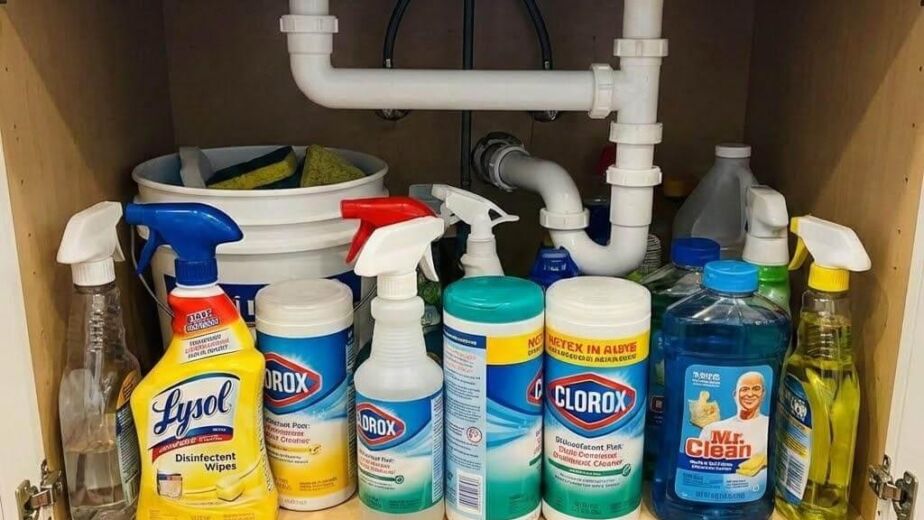
When faced with a smelly, gunky drain, the immediate instinct is to pour a bottle of bleach or a chemical drain cleaner down the sink to \u201csanitize\u201d it.
\n
If you are on a septic system, do not do this.
\n
Bleach and caustic chemicals are designed to kill bacteria. When you pour them down the drain, they travel straight to your septic tank, where they wipe out the beneficial bacteria your system relies on to break down solid waste. Without those bacteria, your septic tank will fill up rapidly, leading to catastrophic drain field failure.
\n
Even worse, bleach doesn\u2019t actually remove the sticky biofilm; it just temporarily disinfects the surface of it. The smell will return in a few days.
\n
\n
The Natural Fix:
\n
To permanently eliminate the musty smell, you have to remove the food source (the biofilm) that the odor-causing bacteria are feeding on.
\n
The safest, most effective way to do this is with a natural, enzyme-based drain cleaner like a natural enzyme-based drain cleaner.
\n
Instead of burning the sludge with harsh chemicals, enzyme cleaners use beneficial bacteria to literally \u201ceat\u201d and digest the organic buildup lining your pipes. You simply pour the liquid down the drain before bed and let it work overnight.
\n
Because it is 100% natural, it is completely safe for your plumbing. And when those enzymes eventually reach your septic tank, they actually help the system by adding more healthy bacteria to the ecosystem.
\n


\n
\n
\n
\n
\n
\n
The Bottom Line
\n
A smelly bathroom drain is a nuisance, but it is rarely a plumbing emergency. By ensuring your P-traps are full of water and using a natural enzyme product like a natural enzyme-based cleaner to digest the organic biofilm inside your pipes, you can keep your bathrooms smelling fresh without putting your expensive septic system at risk.
Regular use of a high-quality monthly septic tank treatment can significantly extend the life of your septic system, prevent costly backups, and maintain a healthy balance of beneficial bacteria, ensuring your system operates efficiently year-round.
\n
\n