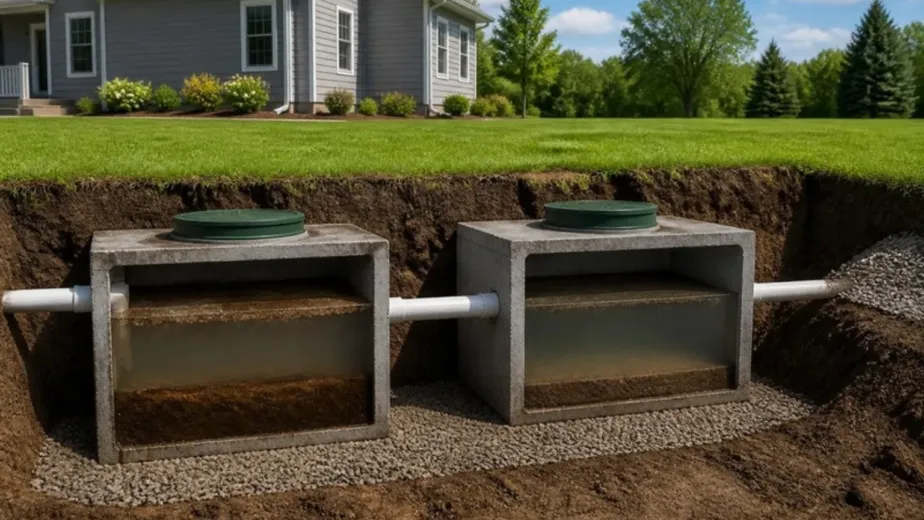
A septic smell after heavy rain usually happens because rainwater saturates the soil around the drainfield, reducing its ability to accept and treat wastewater. The added pressure can push odors toward the yard, plumbing, or roof vent. A brief odor does not automatically prove failure, but a persistent smell—especially with wet ground, slow drains, sewage, or a backup—needs prompt evaluation by a qualified septic or plumbing professional. [1] [2]
What changes during a heavy rain?
A conventional septic system sends liquid effluent from the tank into a drainfield, where it moves through soil for further treatment. Heavy or prolonged rain can fill the soil’s available pore space with water. When that happens, wastewater has less room to move and treatment can slow or stop. Penn State Extension notes that a rain-soaked drainfield may become saturated, preventing effluent from percolating through the soil. [3]
That hydraulic stress can make existing odors easier to notice. Wastewater and gases may move differently through a saturated site, and water may collect near the tank or drainfield. If the field cannot accept incoming household wastewater, the system can develop wet spots, surface wastewater, slow drainage, or a backup. Washington State’s health department lists bad odors, damp areas, slow fixtures, gurgling, and sewage backups among signs of a malfunctioning system. [2]
Rain can also expose a problem that was already developing. A high solids level, clogged outlet or effluent filter, damaged pipe, poor drainage, or an aging drainfield may cope during dry weather but show symptoms when the soil is already wet. Odor alone cannot identify which component is responsible.
Could the smell be coming from a vent instead?
Yes. Septic plumbing uses vent pipes to equalize pressure. EPA says an odor may come from a roof vent or another vent, and that wind direction or a blocked vent can change where the odor is noticed. [1] After a storm, shifting wind, wet vegetation, and air-pressure changes can make a normal vent odor seem stronger or move it toward a window or outdoor living area.
This possibility is one reason not to assume that every post-rain odor means the drainfield has failed. A professional can distinguish a vent or plumbing issue from a wastewater surfacing problem. Do not climb onto a roof, open a tank, or enter any tank, pump chamber, or other confined space to investigate. Septic tanks can contain dangerous gases, and EPA recommends trained specialists for tank cleaning and repair. [4]
What should you check safely from the surface?
Start with observations, not digging. Note where the odor is strongest and whether it is inside, near the house-to-tank line, around the tank, or over the drainfield. Look from a safe distance for:
- Standing water, muddy areas, or sewage surfacing near the tank or drainfield
- Grass that is unusually bright, lush, or spongy over the system
- Toilets, sinks, showers, or tubs draining slowly
- Gurgling, bubbling, or water rising in a fixture
- Odor that continues after the yard and nearby soil have dried
A wet yard immediately after a major storm does not by itself establish septic failure. The more concerning pattern is a drainfield that stays wet after the rest of the property dries, repeated odors after ordinary rainfall, or any combination of odor and plumbing symptoms. UF/IFAS Extension advises limiting water use when a storm-affected system shows standing water or foul odors, because saturated soil cannot handle wastewater as effectively. [5]
Keep children and pets away from standing water that could contain sewage. Do not touch suspected wastewater with bare hands, and wash exposed skin promptly. If sewage has entered the home, avoid contact and follow local public-health guidance for cleanup. [1]
What can you do while the ground is saturated?
Reduce the amount of water entering the septic system. Postpone laundry, long showers, baths, and other high-volume uses; repair running toilets when it is safe to do so; and spread necessary water use over time. Do not send floodwater or basement-pump discharge into a septic system. EPA and Penn State both advise reducing or stopping use when flooding or severe saturation threatens the system. [3] [4]
Keep roof runoff, downspouts, sump-pump discharge, and other stormwater away from the tank and drainfield. EPA explains that excess water can slow or stop wastewater treatment. [6] Do not drive, park, dig, grade, or operate heavy equipment over a saturated drainfield. Wet soil compacts easily, which can reduce its ability to treat wastewater and can damage system components. [4]
Do not open the tank or pump chamber, test electrical equipment, remove an effluent filter, or attempt a repair yourself. If the system has a pump or controls and flooding occurred, keep away from wet electrical components and have a qualified professional assess them. Never pump a tank while the drainfield or surrounding soil is flooded or saturated unless a qualified local authority or professional determines it is safe; pumping under those conditions can allow a tank to float and damage connected pipes. [4]
When should you call a professional?
Arrange a septic-system inspection or plumbing diagnostic if the odor is persistent, returns after each rain, occurs with slow drains or gurgling, or is strongest over a wet or spongy drainfield. Call promptly for sewage surfacing, a plumbing backup, or wastewater inside the home. A professional may need to evaluate the tank level, inlet and outlet components, effluent filter, distribution, drainfield, vents, and any pump or electrical equipment. EPA notes that the exact cause of an odor cannot be diagnosed remotely and recommends contacting a local septic service provider or plumber. [1]
If your system has flooded, follow your local health department’s instructions. EPA advises not using a flooded system until water in the soil absorption field is lower than the surrounding water level, and having suspected damage professionally inspected. [4] If you use a private well after flooding or suspected sewage release, ask your local health department or a certified laboratory about testing before drinking the water. [4]
A routine maintenance record also helps. Keep your permit or system diagram, inspection reports, pumping dates, and notes about recurring odors. EPA recommends regular inspections and pumping based on system condition and household factors rather than treating odor as a substitute for maintenance. [6]
The Bottom Line
A septic smell after heavy rain is often a sign that saturated soil is putting temporary stress on the drainfield, or that rain and wind are changing how a vent odor is carried. It may pass as the ground dries, but odor plus wet spots, slow drains, gurgling, sewage, or a backup is a warning—not a problem to mask. Conserve water, stay out of contaminated or hazardous areas, and have a qualified professional diagnose the system. No additive or home treatment can repair a failed drainfield, damaged pipe, structural defect, or electrical problem.
References
[1] Resolving Septic System Malfunctions: https://www.epa.gov/septic/resolving-septic-system-malfunctions
[2] Signs of Septic System Failure: https://doh.wa.gov/community-and-environment/wastewater-management/septic-system/signs-failure
[3] Protecting Your Septic System from Flooding: https://extension.psu.edu/protecting-your-septic-system-from-flooding/
[4] Septic Systems – What to Do after the Flood: https://www.epa.gov/ground-water-and-drinking-water/septic-systems-what-do-after-flood
[5] Septic System Care After the Storm: https://blogs.ifas.ufl.edu/news/2020/08/19/septic-system-care-after-the-storm/
[6] How to Care for Your Septic System: https://www.epa.gov/septic/how-care-your-septic-system