Can Septic Tank Treatments Clean Your Drain Field Pipes?
If you are experiencing mushy spots in your yard, slow drains, or a gurgling toilet, your first thought might be that your drain field is clogged. It is a common misconception that pouring a septic tank treatment down the toilet will travel out to the yard and physically “clean” or unclog the perforated pipes in your drain field.
The Short Answer: No, bacterial septic tank treatments do not physically clean or unclog drain field pipes. However, using a high-quality bacterial treatment in your tank is one of the most effective ways to *prevent* your drain field from clogging in the first place. By maintaining a healthy bacterial ecosystem in the tank, you ensure that solid waste is digested properly before it ever has the chance to escape into your drain field pipes.
Let’s break down exactly how your drain field works, what causes it to clog, and how bacterial treatments actually protect it.
How Your Drain Field Pipes Actually Work
Your drain field (also called a leach field or soil absorption field) is the final stage of your septic system. According to the U.S. Environmental Protection Agency (EPA), a conventional drain field is a shallow excavation made in unsaturated soil containing a series of perforated pipes laid in gravel-filled trenches [1].
When wastewater (effluent) exits your septic tank, it flows into these perforated pipes. The pipes are not designed to hold water; they are designed to slowly distribute the liquid effluent into the surrounding gravel and soil. As the water percolates downward, the soil naturally filters out harmful coliform bacteria, viruses, and remaining nutrients before the water returns to the groundwater supply [1].
Because these pipes are perforated and buried in dirt and gravel, they cannot be “cleaned” with chemical drain openers or bacterial treatments in the same way you would clean a clogged sink trap.
The Real Threat: The Biomat
The biggest threat to your drain field pipes is not a simple clog—it is the overdevelopment of the “biomat.”
The biomat is a layer of organic material and anaerobic bacteria that forms naturally at the interface where the gravel trench meets the soil [2]. In a healthy, balanced septic system, a thin biomat is completely normal and actually helps filter pathogens out of the wastewater.
However, if your septic tank is not functioning properly, excessive amounts of undigested solid waste, grease, and scum will escape the tank and flow into the drain field pipes. When this thick, organic sludge hits the soil, the biomat grows rapidly. Eventually, it becomes a thick, impermeable black sludge that seals off the soil pores. When the soil can no longer absorb water, the effluent backs up into the pipes, floods the yard, and eventually backs up into your house [2].
How Bacterial Treatments Protect the Drain Field
While a bacterial additive cannot dissolve a severe biomat or clear a completely failed drain field, it plays a crucial role in upstream prevention.
A septic tank is a biological processing plant. The bacteria inside the tank are responsible for digesting organic matter, which significantly reduces the volume of sludge and keeps the effluent clear [3].
If your tank’s bacterial population is healthy, up to 70 percent of incoming solids are digested before the effluent ever leaves the tank [2]. But everyday household habits—like doing multiple loads of laundry in one day, using bleach-based cleaners, or washing antibacterial soap down the drain—can kill off these vital microbes [3]. When the bacteria die, the solid waste stops breaking down. The sludge layer rises rapidly, and raw, undigested sewage is pushed out into your drain field.
This is where a high-quality bacterial treatment becomes essential. By flushing a monthly bacterial treatment down the toilet, you are continuously replenishing the healthy microbes that household chemicals destroy. This ensures that the tank maintains maximum digestive power, keeping the sludge layer low and ensuring that only clear, highly treated effluent flows into your drain field pipes.
What to Do If Your Drain Field is Already Clogged
If your drain field is already showing signs of failure (standing water, sewage odors in the yard, or plumbing backups), adding more bacteria will not fix the immediate problem.
In these cases, you must contact a septic professional. They may recommend:
**Pumping the tank:** This immediately stops the flow of solids into the field.
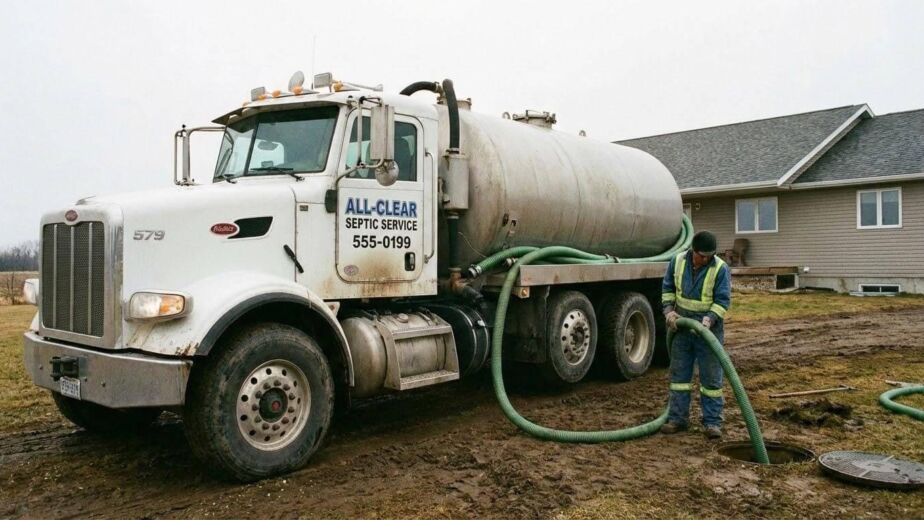
**Hydro-jetting:** A professional can use high-pressure water to blast debris and roots out of the lateral pipes.
**Resting the field:** Diverting water to a backup field (if you have one) allows the clogged biomat time to dry out and break down naturally.
The Bottom Line
You cannot rely on additives to clean out drain field pipes that are already clogged with solid waste. However, treating your septic tank as a living ecosystem is the best insurance policy for your drain field. By pumping your tank every 3 to 5 years and using a high-quality bacterial treatment monthly to maintain peak digestion, you stop the solids at the source—protecting your expensive drain field pipes for decades to come.
──────────────────────────────────────────────────
References
[1] U.S. Environmental Protection Agency. “How Septic Systems Work.” EPA.gov. https://www.epa.gov/septic/how-septic-systems-work
[2] West Coast Sanitation. “The Role of Bacteria in a Healthy Septic System.” https://westcoastsanitationinc.com/the-role-of-bacteria-in-a-healthy-septic system/
[3] Lee, B. D., & Coyne, M. (2012). “Impacts of Additives on Septic System Performance.” University of Kentucky College of Agriculture. https://publications.ca.uky.edu/sites/publications.ca.uky.edu/files/HENV505.pdf