Yes—the holiday cooking septic system question has a practical answer: an occasional busy meal will not automatically overload a healthy, properly maintained system, but a sudden surge of wastewater, food solids, fats, oils, grease, or rain-saturated soil can push a marginal system into trouble. The safest approach is to manage both how much water leaves the house and what goes down the drain.
Why can a holiday put more stress on a septic system?
A conventional septic system receives wastewater from the home, holds it in a tank so solids settle and floatable material separates, and sends liquid effluent to a drainfield for gradual treatment in the soil. [1] Every sink rinse, dishwasher cycle, shower, and toilet flush adds to that flow.
The drainfield has a limited ability to accept liquid at one time. EPA says that if too much liquid overloads the drainfield, it can flood and cause sewage to surface or create backups in toilets and sinks. [1] A holiday may combine several water-intensive activities—food preparation, repeated handwashing, a full dishwasher, guests taking showers, and laundry—within a short window.
That does not mean a single holiday causes failure by itself. Risk is higher when the system is already overdue for service, the tank has excessive solids, the drainfield is poorly absorbing wastewater, or the soil is saturated by heavy rain. A normal system generally has more capacity than one showing slow drains, odors, wet spots, or backups.
Which holiday kitchen waste is most harmful?
Fats, oils, and grease (FOG) deserve special attention. Do not pour turkey drippings, gravy fat, bacon grease, butter, cream, cooking oil, or greasy pan water down a sink or toilet. EPA specifically advises never pouring cooking oil or grease down the drain. [2]
FOG can cool and accumulate in plumbing and adds scum-forming material to the septic tank. EPA also warns that food waste from a garbage disposal can increase solids in the tank; if solids leave the tank, they can clog drainfield pipes and increase the biological mat that develops in the trenches. [2]
Scrape plates and pans into the trash or a local organics program instead of rinsing scraps into the drain. Wipe greasy cookware with a paper towel before washing it, and dispose of the towel with household waste. Do not use the toilet as a disposal route for grease, wipes, paper towels, coffee grounds, or other trash; EPA’s rule is to flush only human waste and toilet paper. [2]
If your home has a garbage disposal, use it sparingly. A disposal does not make food waste disappear, and the extra solids and water still enter the septic system. Clemson Cooperative Extension lists fats, oils, grease, food waste, and other solids among materials that should stay out of a septic tank. [3]
How should you schedule holiday dishwashing?
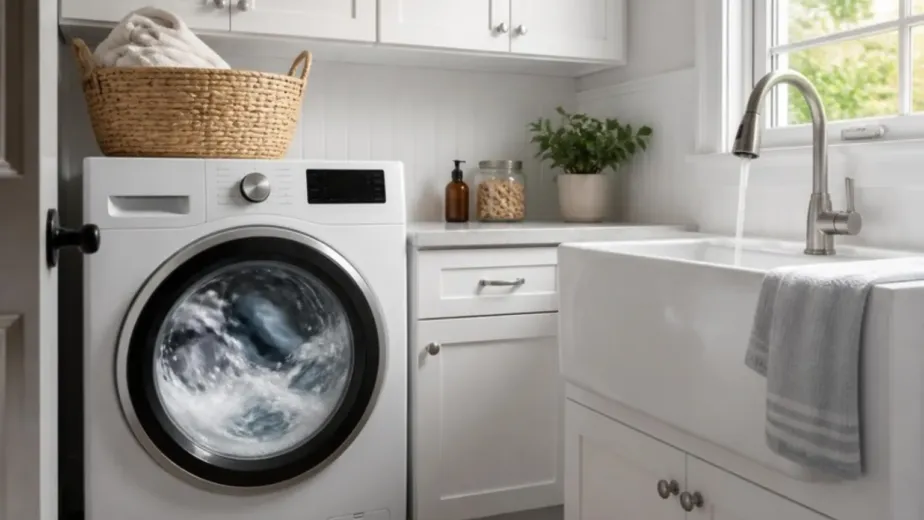
Run the dishwasher only with a full load, and avoid running it at the same time as a washing machine or showers. Clemson Extension recommends turning on only one water-using appliance at a time. [3] Michigan State University Extension likewise advises against running the washer, dishwasher, and shower simultaneously. [4]
For handwashing, fill a basin or one side of a divided sink rather than letting the faucet run continuously. Scrape dishes first; do not pre-rinse every plate under running water. If guests are staying overnight, spread showers, laundry, and dishwashing across the day and week when possible instead of doing everything in a concentrated burst.
These steps reduce peak flow—the amount entering the system over a short period. University of Minnesota guidance recommends washing only full loads of dishes and clothing and spreading water use as evenly as possible throughout the day and week. [5]
Fix a running toilet or leaking faucet before hosting. EPA notes that all water sent down household pipes enters the septic system, and even an unnoticed leak can add substantial flow. [2] Also keep roof drains, sump-pump discharge, and other stormwater away from the drainfield; outside water does not belong in the septic system and can make treatment harder. [2]
What if holiday rain or snow has saturated the yard?
A wet drainfield has less ability to accept additional wastewater. Clemson Extension advises avoiding washing machines, dishwashers, and similar appliances during and directly after a rain event because rain can saturate the drainfield. [3]
If the drainfield is visibly soggy, wastewater is surfacing, or the ground above it is unusually wet, reduce household water use and contact a qualified septic professional or your health department for guidance. Keep vehicles, heavy equipment, and gatherings off the drainfield so the soil is not compacted. Do not dig into the area or open a tank to investigate it yourself.
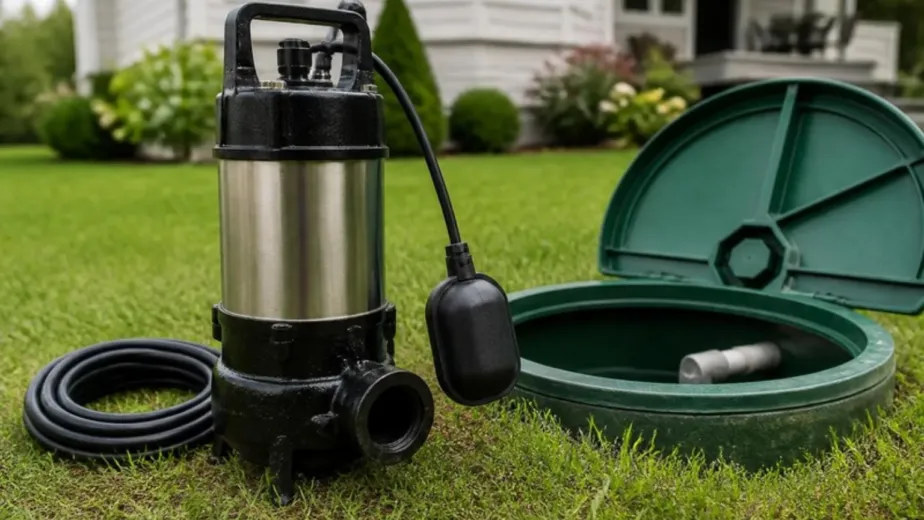
Local rules and system designs vary. Pump systems, mound systems, aerobic treatment units, and other alternative systems may have electrical or mechanical components and may require different operating instructions. Follow the system’s approved maintenance plan and local requirements rather than assuming advice for a conventional gravity system applies to yours.
How can you prepare before hosting?
A few checks can prevent avoidable strain:
- Check your maintenance records. EPA says a typical household system should be inspected at least every three years, while tanks are typically pumped every three to five years; actual timing depends on household size, wastewater volume, solids, tank size, and system type. [2] If service is due—or if you do not know when it was last done—schedule a qualified professional rather than trying to inspect tank levels yourself.
- Make a kitchen plan. Set aside a container for used cooking oil and grease. Scrape food into the trash or an approved organics collection stream, and keep coffee grounds and fibrous scraps out of drains.
- Protect the plumbing. Do not rely on chemical drain openers for a slow sink. EPA recommends alternatives such as a drain snake for a clog; persistent or recurring slow drainage needs professional diagnosis. [2]
- Set a water-use rhythm. Run one full dishwasher load, wait before starting another water-intensive task, and postpone nonessential laundry until after guests leave.
- Know the warning signs. Slow drains, gurgling, sewage odors, wet or unusually green patches over the drainfield, sewage surfacing, or a backup are reasons to stop adding wastewater and call a qualified septic or plumbing professional.
What should you do if a backup happens?
Stop using sinks, toilets, showers, the dishwasher, and washing machine. Keep people and pets away from sewage, and do not touch contaminated water without appropriate protection. Do not enter a septic tank, pump chamber, crawlspace, or other confined space; septic gases and wastewater can be dangerous.
A backup can result from a blocked pipe, a full tank, a failed pump or electrical component, a damaged baffle, a saturated or clogged drainfield, or another structural or mechanical defect. Only an appropriately qualified septic or plumbing professional can determine the cause. A biological additive, enzyme, or other treatment should not be treated as a repair, a substitute for pumping, or a solution for a failed drainfield or mechanical problem.
The Bottom Line
A healthy septic system can usually handle a holiday gathering when wastewater is spread out and kitchen solids stay out of the drains. Run full loads, avoid simultaneous appliances, limit garbage-disposal use, never pour FOG down a drain, and pay attention to rain and warning signs. If sewage backs up, surfaces, or smells strongly, stop using the system and arrange professional inspection promptly.
References
[1] How Septic Systems Work: https://www.epa.gov/septic/how-septic-systems-work
[2] How to Care for Your Septic System: https://www.epa.gov/septic/how-care-your-septic-system
[3] Be Septic Safe: Best Practices for Septic System Maintenance: https://hgic.clemson.edu/factsheet/be-septic-safe-best-practices-for-septic-system-maintenance/
[4] Water conservation can prolong septic system life: https://www.canr.msu.edu/news/water-conservation-can-prolong-septic-system-life
[5] Care and maintenance: https://septic.umn.edu/care-and-maintenance