To understand how to read septic service report paperwork, start by separating observations from recommendations: the report should tell you what system was inspected, what the technician saw or measured, what work was completed, and what needs attention next. A clean-looking report is useful only when it includes enough detail to show whether the tank, pipes, pumps, controls, and drainfield were actually evaluated.
A service report is not always a pass/fail certificate. Keep it with your permit, past pumping receipts, repair invoices, and maintenance records.
What should the first section identify?
Look for the property address, inspection date, technician or company information, and the reason for service. The report should also identify the system type—for example, a conventional tank-and-drainfield system or an alternative system with pumps and controls. Oklahoma State University Extension says a completed inspection report should include the system type, inspection date and time, the integrity of components, key observations, and recommended repairs or replacements. [2]
The report may list tank capacity, the number of compartments, risers, a pump tank, distribution box, or treatment units. Do not assume an omitted item was inspected. If the report does not say whether a component was opened, tested, or inaccessible, ask the service professional to clarify.
What do “sludge,” “scum,” and “liquid level” mean?
Inside a septic tank, heavy solids settle into the sludge layer at the bottom. Fats, oils, and other floating material form the scum layer at the top. The liquid between them is the clarified wastewater that leaves through the outlet. The technician may record the thickness of the layers, the liquid depth, or the distance from each layer to the outlet.
These numbers help determine whether pumping is due; a calendar interval alone cannot answer that for every household. EPA says pumping frequency depends on factors such as tank size, household size, water use, and solids accumulation. Its general guidance is inspection every one to three years and pumping every three to five years, with more frequent attention possible for complex systems. [1] [4]
Pay attention to wording such as “pumped,” “not pumped,” or “pump recommended.” “Pumped” means the service occurred; it does not mean every other part of the system is healthy. If the report says solids are high, ask when pumping should occur and whether the technician found a reason for unusually rapid buildup, such as excess water or a disposal habit.
What are baffles and an effluent filter?
The inlet baffle helps direct wastewater entering the tank. The outlet baffle helps keep floating scum and settled solids from moving toward the drainfield. An effluent filter is a screen or filter at the outlet on systems that have one. It can catch solids before they leave the tank, but it also needs inspection and cleaning according to the system’s requirements.
A report might say “baffles intact,” “outlet blocked,” “filter dirty,” or “staining above outlet.” These are not interchangeable comments. A blocked outlet baffle or filter can contribute to a backup, including sewage surfacing near the tank. [3] Staining above the outlet can indicate that wastewater previously rose higher than it should have. Ask whether the obstruction was removed, whether the filter was serviced, and whether the technician recommends checking for a cause rather than simply recording the symptom.
Never lean over an open tank or enter a tank. Harmful gases and fall hazards are present. Have a qualified professional perform tank access and inspection, and make sure lids and access covers are secured afterward.
What does the tank condition section tell you?
Look for notes about cracks, leaks, corrosion, damaged lids, broken risers, pipe connections, and water levels. A report may describe a low water level as a possible leak indicator or a high level at the outlet as a possible blockage. These observations are clues, not a complete diagnosis; the technician may recommend a separate leak test, camera inspection, excavation, or repair.
“Good condition” should be read in context. It may describe the visible tank structure, not the soil treatment area. Ask whether both compartments and the inlet and outlet pipes were inspected. If a component was inaccessible or not tested, that limitation belongs in your decision about what the report proves.
How do I read pump, float, alarm, and control notes?
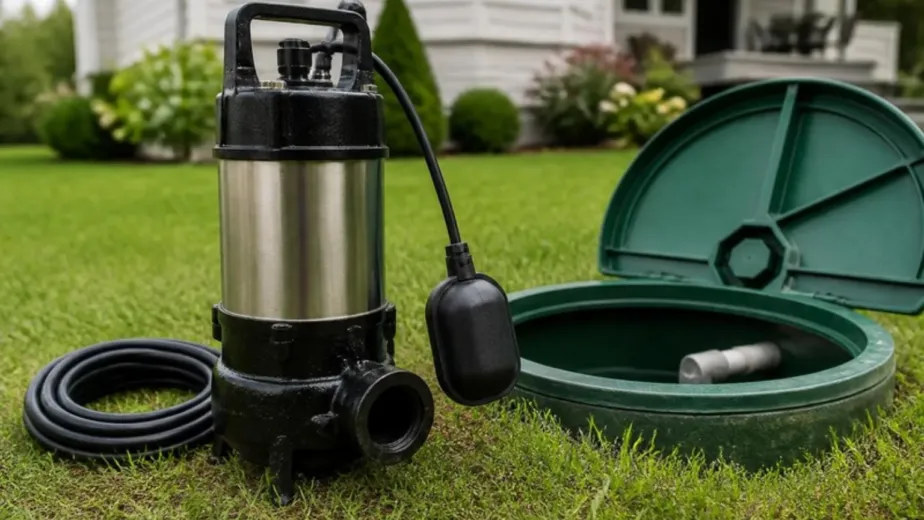
Alternative systems may include a pump tank, electrical floats, a control panel, an alarm, an aerator, or timed dosing. A report may use terms such as float switch, high-water alarm, dose, timer, or pump cycle. In plain English, these components help move or manage wastewater when gravity alone is not enough.
A note such as “alarm tested” is different from “alarm operational under all conditions,” and “pump ran” is different from “pump meets the design requirement.” Read the exact wording and look for model-specific measurements or limitations. EPA notes that alternative systems with electrical or mechanical parts generally need more frequent inspection, often annually, and a service contract may be important. [1]
Do not open an electrical control panel, handle wiring, or troubleshoot a pump around wastewater. Ask a qualified septic or plumbing professional to diagnose electrical, mechanical, or exposure hazards.
What does the drainfield section mean?
The drainfield, also called the soil treatment or dispersal area, receives liquid from the tank and allows the soil to treat and disperse it. Look for observations about standing water, damp or spongy soil, odors, unusually lush grass, unequal distribution, ponding, or a camera or excavation. EPA lists standing water, unequal drainage, and other evidence of surfacing as possible signs of failure during an inspection. [4]
A report saying “no visible surface issue” is not the same as “the drainfield will last” or “the system is approved.” Weather, recent water use, groundwater, buried conditions, and the limits of the inspection affect what can be seen. Washington State Department of Health lists backups, slow drains, gurgling, wet areas, odors, and bright green spongy grass among warning signs that warrant prompt attention. [3]
Keep vehicles, heavy equipment, structures, and excess water away from the drainfield unless local authorities and a qualified professional say otherwise. EPA explains that traffic can compact soil and damage pipes, while roof or sump drainage can saturate the field. [1]
How should I handle “recommended repairs” or “monitor”?
Read the action language carefully. “Monitor” may mean the technician saw a condition that needs documented follow-up, not that it is permanently resolved. “Repair,” “replace,” “clean filter,” “pump,” “camera,” or “health department review” describes a next step—not proof that the step has already happened.
If the report mentions sewage backup, surfacing wastewater, a failed drainfield, damaged structure, exposed wiring, or an alarm that does not work, limit contact with wastewater and arrange qualified professional help promptly. A treatment additive cannot repair a failed system, replace pumping, remove roots, restore a failed drainfield, or correct a mechanical or structural defect. EPA does not recommend routine septic additives for domestic wastewater treatment and says operational issues should be assessed by a professional or local regulator. [4]
Before accepting a repair recommendation, ask what was observed, tested, uncertain, and at risk if delayed. Check local permitting or health-department requirements before structural work or drainfield replacement; rules are location-specific.
The Bottom Line
A useful septic service report connects component, observation, measurement, action, and date. Confirm that it addresses the tank and outlet path, any filter or pump equipment, and the drainfield—not just the pumping transaction. Save every report, compare readings over time, and treat backups, surfacing sewage, electrical problems, and structural concerns as professional-diagnosis issues.
References
[1] How to Care for Your Septic System: https://www.epa.gov/septic/how-care-your-septic-system
[2] Inspection of Septic Systems: https://extension.okstate.edu/fact-sheets/inspection-of-septic-systems
[3] Signs of Septic System Failure: https://doh.wa.gov/community-and-environment/wastewater-management/septic-system/signs-failure
[4] Frequent Questions on Septic Systems: https://www.epa.gov/septic/frequent-questions-septic-systems