What is a Drain Field and Why is it the Most Important Part of Your Septic System?
When most people think of a septic system, they picture the large concrete tank buried in their yard. While the tank is certainly important, it’s only half the equation. The true unsung hero of your wastewater treatment process is the drain field.
The Short Answer: A drain field (also known as a leach field) is a network of perforated pipes buried in trenches filled with gravel or crushed rock. It is responsible for filtering the liquid wastewater that exits your septic tank, using the natural soil to remove harmful bacteria before the water reaches the groundwater table.
If your septic tank is the stomach of the operation, the drain field is the kidneys. And when it fails, the entire system shuts down. Let’s look at how it works and how to protect it.
Regular use of a high-quality bacterial septic tank treatment can significantly extend the life of your septic system, preventing costly repairs and ensuring its efficient operation for years to come.
How a Drain Field Works
Every time you run water in your home, it flows into your septic tank. Inside the tank, heavy solids sink to the bottom (sludge), and lighter fats and oils float to the top (scum). The relatively clear liquid in the middle—called effluent—is what flows out of the tank and into the drain field.
Once the effluent reaches the drain field, it slowly trickles out of the perforated pipes and down into the gravel trenches. From there, it percolates into the underlying soil.
This is where the real purification happens. The soil acts as a massive, natural biological filter. As the wastewater moves downward, naturally occurring microbes in the soil consume the harmful bacteria, viruses, and excess nutrients. By the time the water reaches the deep groundwater table, it is clean and safe.
Why the Drain Field is So Vulnerable
The drain field is the most delicate and expensive part of your septic system. If it becomes clogged or compacted, the effluent has nowhere to go. When this happens, the wastewater will either back up into your home or pool on the surface of your yard, creating a swampy, foul-smelling mess.
Several things can cause a drain field to fail prematurely:
- Too Much Water: If you use more water than the soil can absorb (like doing six loads of laundry in one day), the trenches flood, and the system backs up.
- Compacted Soil: Driving vehicles, parking cars, or building heavy structures over the drain field compacts the soil, destroying its ability to absorb and filter water.
- Solid Waste Escape: If your septic tank is not pumped regularly, the sludge layer gets too high. Solid waste then escapes into the drain field, permanently clogging the soil pores.
- Harsh Chemicals: Pouring bleach, antibacterial soaps, and harsh chemical drain cleaners down the sink kills the healthy bacteria in your tank. Without these bacteria breaking down the waste, more solids are pushed into the drain field. By replenishing the bacteria in your tank with a natural septic tank treatment, you ensure that solid waste is broken down efficiently, protecting your drain field from becoming clogged with sludge.
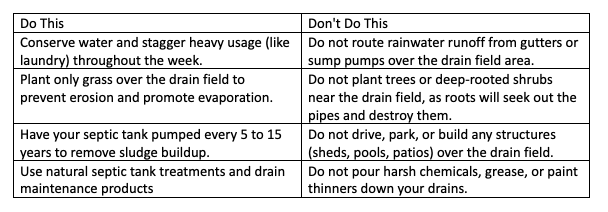
How to Protect Your Drain Field
Replacing a failed drain field can cost thousands, or even tens of thousands, of dollars. The good news is that protecting it is simple if you follow a few basic rules:
The Bottom Line
Your drain field is the final, critical step in safely treating your household wastewater. It relies on the natural filtering power of the soil to protect the environment and keep your plumbing flowing smoothly. By being mindful of your water usage, keeping heavy weight off the yard, and supporting the bacteria in your tank with a regular septic maintenance routine, you can ensure your drain field lasts for decades.