Running an RV park or campground is a demanding business. Between managing reservations, maintaining the grounds, and keeping guests happy, the last thing you want to worry about is a catastrophic failure of your commercial septic system.
The Short Answer: RV parks and campgrounds face unique septic challenges that residential systems do not. The extreme, fluctuating volume of wastewater, the high concentration of harsh chemicals used in RV holding tanks, and the sheer amount of solid waste can rapidly overwhelm a commercial system. To prevent costly backups and drain field failures, park owners must enforce strict rules on what guests can flush, maintain an aggressive pumping schedule, and constantly replenish the system with industrial-strength, natural bacteria.
Let’s look at exactly why RV park septic systems fail so frequently, the hidden dangers of RV holding tank chemicals, and the proactive maintenance plan that will keep your park running smoothly all season long.
The Problem: Extreme Fluctuations in Volume
A residential septic system is designed for a steady, predictable flow of water based on the number of people living in the house. A commercial system at an RV park is designed for maximum capacity, but the actual usage is wildly unpredictable.
During the off-season, the system might see a trickle of water. On a busy holiday weekend, it might receive thousands of gallons of wastewater in a single day.
This massive surge of water destroys the “retention time” in the septic tanks.
When wastewater enters the tank, the heavy solid waste needs 24 to 48 hours to sink to the bottom (forming the sludge layer). If 50 RVs all dump their holding tanks on a Sunday morning before checkout, the sudden influx of water creates turbulence. The solid sludge gets stirred up and mixes with the liquid effluent. Because the tank is full, this newly mixed, solid-filled wastewater is immediately pushed out into the drain field.
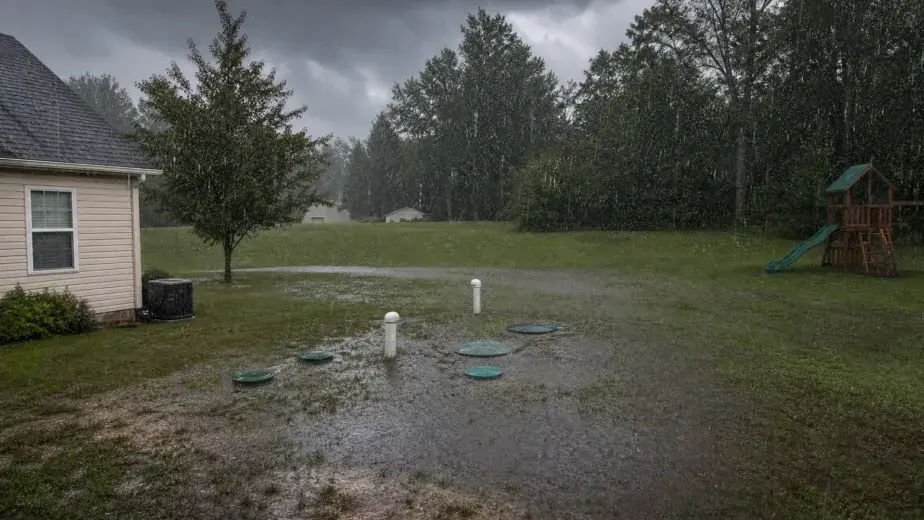
Once solid waste enters the drain field, it permanently clogs the soil, causing the system to fail and raw sewage to back up into the park.
The Hidden Danger: RV Holding Tank Chemicals
The biggest threat to an RV park septic system isn’t the volume of waste; it’s the chemicals used to treat that waste before it even reaches the park’s tanks.
RV owners use chemical treatments (often called “blue juice”) in their black water holding tanks to control odors and break down toilet paper. Historically, these treatments contained formaldehyde, a highly toxic chemical. While formaldehyde is less common today, many modern RV treatments still rely on harsh biocides, quaternary ammonium compounds (quats), and heavy artificial fragrances.
These chemicals are designed to do one thing: kill bacteria.
When an RV dumps its tank into your park’s sewer system, those biocides flow directly into your commercial septic tanks. They instantly wipe out the beneficial bacteria your system relies on to break down solid waste. Without those bacteria, your tanks will fill with indigestible sludge at an alarming rate, forcing you to pay for expensive pump-outs much more frequently.
The “Flushable” Wipe Epidemic
Campers and RV owners are notorious for flushing things they shouldn’t. Because they are on vacation, they often prioritize convenience over plumbing health.
“Flushable” wipes, paper towels, feminine hygiene products, and thick, multi-ply toilet paper are flushed constantly. None of these items break down in a septic tank. They accumulate at the bottom, tangle with solid waste to form massive clogs, and frequently jam the mechanical pumps used in large commercial systems.
A Proactive Maintenance Plan for Park Owners
To protect your investment and keep your park open, you must implement a strict, proactive maintenance strategy.
1. Educate Your Guests (Aggressively)
You cannot control what happens inside an RV, but you can control the information you provide.
- **Clear Signage:** Post large, highly visible signs at every dump station and in every public restroom explicitly stating: *”Do NOT flush wipes, paper towels, or feminine products. Our septic system will fail.”*
- **Welcome Packets:** Include a bold warning in the welcome packet or email every guest receives upon booking, explaining the rules for the sewer hookups.
- **Sell Safe Products:** Stock your camp store with septic-safe, single-ply toilet paper and natural, enzyme-based RV holding tank treatments. If you make the safe products easily accessible, guests are more likely to use them.
2. Maintain a Strict Pumping Schedule
Do not wait for a backup to call a pumper. During peak season, you must schedule regular, preventative pump-outs based on the capacity of your tanks and the occupancy of your park. A clean tank handles the Sunday morning surge much better than a full one.
3. Replenish the Bacteria Constantly
Because your system is constantly bombarded with RV chemicals that kill bacteria, you must manually replace that bacteria on a regular basis.
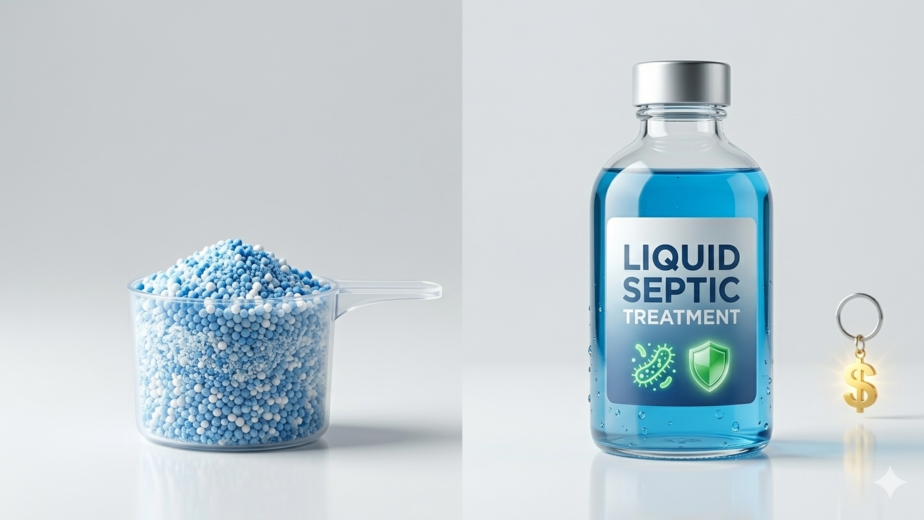
You cannot rely on the natural ecosystem to recover on its own. You need an industrial-strength, natural bacterial treatment like a high-quality bacterial treatment. By introducing billions of healthy, hungry bacteria directly into your lift stations or main tanks every month, you ensure the solid waste is broken down efficiently, significantly reducing the sludge layer and protecting your drain field.
The Bottom Line
An RV park septic system is under constant attack from high volume, harsh chemicals, and improper flushing habits. By educating your guests, maintaining a strict pumping schedule, and aggressively treating your tanks with natural bacteria, you can prevent catastrophic failures, avoid foul odors, and ensure your guests have a pleasant, uninterrupted stay.
To ensure the longevity and optimal performance of your septic system, consider incorporating a high-quality monthly bacterial septic tank treatment into your routine. These treatments help maintain a healthy balance of beneficial bacteria, preventing sludge buildup and protecting your drain field from costly damage.