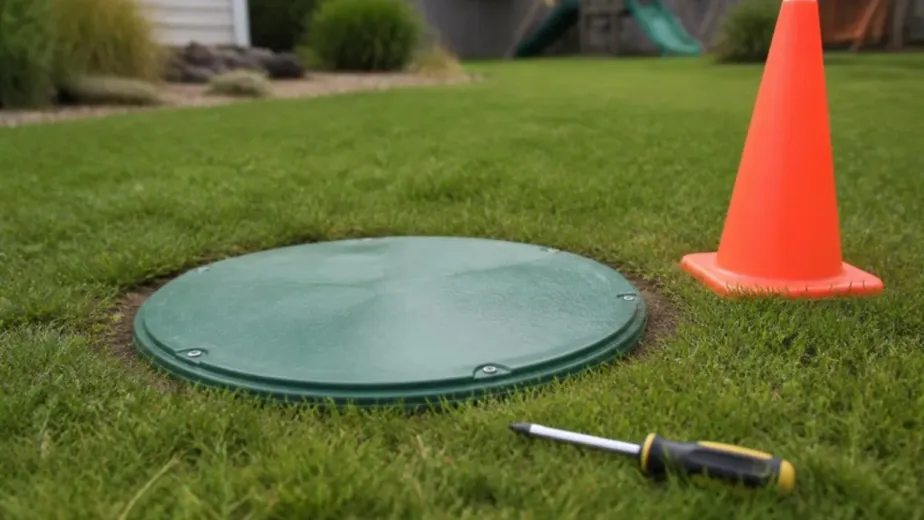
What is a septic tank riser? A septic tank riser is a vertical, sealed extension fitted over an underground tank opening so the lid reaches the surface, giving qualified professionals easier access for inspection, pumping, and maintenance. It does not change how wastewater is treated, increase tank capacity, or repair a failing septic system. It simply makes an important access point easier to find and use.
Why do septic tanks have risers?
A conventional septic tank may be buried beneath soil, grass, or landscaping. Without a riser, a service provider may have to locate the tank and excavate the lids each time the tank is inspected or pumped. A riser brings that access opening up to finished grade or close to it. Michigan State University Extension describes risers as a way to create a vertical portal for inspection and pumping access. [1]
A system may have more than one access point. Depending on the tank and overall design, access may be needed at the inlet, outlet, a center manhole, a pump tank, or another component. The right locations are determined by the tank configuration and local requirements—not by a one-size-fits-all kit.
What are the benefits of a septic tank riser?
The main benefit is service access. A visible, properly installed access lid can make routine work more straightforward and reduce repeated digging in the yard. That may save labor and protect the lawn over the life of the system; actual costs vary by property, access conditions, local rules, and the work required. [1]
Risers can also make it easier for a homeowner to:
- Find the tank before an emergency or property sale.
- Keep inspection and pumping records tied to a known location.
- Notice a damaged, missing, or unsecured cover sooner.
- Give a service professional access to the tank without excavating an unknown area.
Access is especially useful because EPA generally recommends inspecting a septic system every one to three years and pumping the tank every three to five years, with frequency adjusted for tank size, household use, solids accumulation, and system type. [2] A riser does not eliminate those tasks; it makes access to them more practical.
Is a septic tank riser required?
There is no single nationwide answer. Requirements can differ by state, county, system type, installation date, and the permit or approval covering the property. Some jurisdictions require risers for new installations or when an owner undertakes certain construction or septic-system work; others recommend them. Clallam County, Washington, for example, notes that state code requires risers in circumstances covered by its guidance, while Island County describes them as recommended rather than universally required in its local homeowner information. [3] [4]
Before adding, replacing, or extending a riser, contact the local health or environmental department and check the system permit or as-built drawing. Ask whether a permit, inspection, approved design, or licensed installer is required. Local rules may also address the lid, load rating, watertightness, child security, and finished grade.
What makes a riser safe?
A riser is safe only when the entire access assembly is structurally sound and secured. Practical safety features commonly emphasized by local health guidance include:
- A lid that fits the riser and is fastened against unauthorized or accidental opening.
- A watertight, gas-tight seal appropriate for the tank and site.
- Materials able to withstand expected site loads, weather, and corrosion.
- An installation that does not create a trip hazard or leave an opening below grade.
- A cover protected from vehicles and heavy equipment unless it was specifically designed and approved for that load.
The exact specification depends on the tank, location, soil, traffic, and local code. A cover intended only for a lawn is not automatically suitable for a driveway. Never place soil, mulch, furniture, or a temporary object over an access opening as a substitute for a properly secured lid.
Can a homeowner install a septic tank riser?
Sometimes, but this is not a simple “dig and attach” project. The tank must be located without damaging buried utilities, the correct openings must be identified, and the tank must be checked for compatibility and structural condition. The riser must be sealed to the tank and the lid secured according to the applicable installation instructions and local requirements.
If the tank is old, cracked, leaking, unstable, or difficult to identify, have a qualified septic professional evaluate it. If you are unsure where the tank or utilities are, use the property’s as-built records and contact the appropriate utility-locating service before digging. A local authority may require an inspection or permit even when the work appears minor.
Do not remove a tank lid casually. Never enter a septic tank, pump chamber, riser, or any other confined space. Septic gases can overcome a person quickly, and wastewater can carry disease-causing organisms. Keep children and pets away from an open or damaged access point, never leave it unattended, and secure the lid immediately. For exposed wastewater, electrical controls, pumps, alarms, backups, or structural concerns, use a qualified septic or plumbing professional.
How should a riser be maintained?
Treat the riser and lid as part of the septic system, not as a permanent, maintenance-free cover. During routine service, ask the professional to check for movement, cracks, corrosion, missing fasteners, damaged seals, odors, and water intrusion. Make sure the lid remains visible or its location is recorded, and keep vehicles and structures off the tank and drainfield unless the design specifically permits the load.
A riser can reveal an access problem, but it cannot diagnose the cause of slow drains, odors, standing water, sewage surfacing, or a backup. EPA lists backups, very slow drainage, gurgling, wet areas, sewage odors, and unusually lush or spongy grass among signs that a system may be malfunctioning. [2] Stop treating the symptom as a riser problem and arrange a professional inspection. Do not rely on bacterial or enzyme additives to correct a failed drainfield, root intrusion, blockage, pump or electrical failure, leak, or structural defect; EPA says household septic additives are not recommended because they may be ineffective or harmful. [2]
What should you do if the lid is damaged or missing?
Keep people and pets away and do not improvise a cover. A missing, cracked, shifting, or unfastened lid is an immediate fall and exposure hazard. Contact a qualified septic professional or the local health department for the correct replacement and any required inspection. If sewage is backing up into the home or surfacing outdoors, limit contact, keep children and animals away, and seek prompt professional help.
The Bottom Line
A septic tank riser is a sealed vertical access extension—not a treatment device. Properly designed and installed, it can reduce digging, simplify routine service access, and make a buried tank easier to monitor. It must still meet local requirements, support a secure lid, and be inspected by professionals as part of normal septic maintenance. Never enter a tank or leave an opening unsecured, and treat backups, wastewater exposure, electrical problems, and suspected structural failure as professional-service issues.
References
[1] The benefits of septic tank risers — Michigan State University Extension: https://www.canr.msu.edu/news/the-benefits-of-septic-tank-risers
[2] Frequent Questions on Septic Systems — U.S. Environmental Protection Agency: https://www.epa.gov/septic/frequent-questions-septic-systems
[3] Maintenance: Caring for Your Septic System — Island County, Washington: https://www.islandcountywa.gov/675/Maintenance
[4] Installing Access Risers — Clallam County, Washington: https://www.clallamcountywa.gov/501/Installing-Access-Risers