
A clogged sink is one of the most common household annoyances. If you are on a city sewer, you might just grab a bottle of harsh chemical drain cleaner and call it a day. But if you have a septic system, pouring chemicals down the drain is one of the fastest ways to destroy it.
The Short Answer: To unclog a sink safely when you have a septic system, you must avoid chemical drain cleaners like bleach or lye, as they kill the beneficial bacteria in your tank. Instead, use physical tools like a plunger or a drain snake, followed by a natural, enzyme-based drain cleaner to break down any remaining organic buildup.
Let’s walk through the exact, step-by-step process for clearing a stubborn sink clog without putting your expensive septic system at risk.
Why Chemical Drain Cleaners are Dangerous
Your septic tank is a living ecosystem. It relies on a delicate balance of naturally occurring bacteria to break down solid waste. When you pour a commercial chemical drain cleaner down the sink, the active ingredients—usually sodium hypochlorite (bleach) or sodium hydroxide (lye)—travel straight into the tank.
These caustic chemicals do exactly what they are designed to do: they kill biological matter.
If you wipe out the healthy bacteria in your tank, the solid waste stops breaking down. The sludge layer at the bottom of the tank rapidly builds up and is eventually pushed out into your drain field, permanently clogging the soil and causing a catastrophic system failure.
This is why you must use mechanical methods or natural enzymes to clear your pipes.
Step 1: The Boiling Water Method
If the sink is draining slowly but isn’t completely stopped, start with the simplest solution: boiling water.
This method is highly effective for bathroom sinks clogged with soap scum and toothpaste, or kitchen sinks partially blocked by minor grease buildup.
- 1. Boil a large pot or kettle of water.
- 2. Carefully pour the boiling water directly down the drain in two or three stages, pausing for a few seconds between each pour to let the hot water melt the buildup.
- 3. Run hot tap water for a minute to flush the softened debris away.
*Note: Do not use boiling water if your sink is attached to PVC pipes, as extreme heat can warp or melt the plastic joints.*
Step 2: The Plunger
If boiling water doesn’t work, or if the sink is completely stopped, it’s time to use a plunger.
Many people don’t realize that a standard toilet plunger (which has a flange or “lip” on the bottom) is not the right tool for a sink. You need a standard cup plunger, which has a flat bottom that creates a tight seal against the sink basin.
- 1. If you have a double kitchen sink, plug the second drain with a wet cloth or a stopper. If you are working on a bathroom sink, plug the overflow hole near the top of the basin with a wet cloth. This ensures the pressure from the plunger is directed down the pipe, not out the other hole.
- 2. Fill the clogged sink with enough water to cover the cup of the plunger.
- 3. Place the plunger over the drain, ensuring a tight seal, and plunge vigorously up and down several times.
- 4. Remove the plunger and see if the water drains. Repeat if necessary.
Step 3: The Drain Snake (Zip-It Tool)
For bathroom sinks, the culprit is almost always hair tangled with soap scum just below the stopper. A plunger often can’t dislodge this tangled mess.
The best tool for this job is an inexpensive, flexible plastic drain snake (often called a “zip-it” tool). These cost a few dollars at any hardware store and have small, backward-facing barbs.
- 1. Remove the sink stopper if possible.
- 2. Slide the plastic snake down the drain as far as it will go.
- 3. Slowly pull it back up. The barbs will grab the hair and pull the entire clog out in one disgusting (but satisfying) piece.
Step 4: Clean the P-Trap
If the sink is still clogged, the blockage is likely in the P-trap—the U-shaped pipe directly beneath the sink.
- 1. Place a bucket under the P-trap to catch any water or debris.
- 2. Using a wrench or pliers (or your hands, if the connections are plastic and hand-tightened), loosen the slip nuts on both ends of the P-trap.
- 3. Remove the trap and dump the contents into the bucket.
- 4. Use a stiff brush or a piece of wire to clean out any remaining gunk inside the trap.
- 5. Reattach the P-trap, tighten the slip nuts, and run hot water to test the flow.
Step 5: Prevent Future Clogs Naturally
Once the sink is flowing freely again, the best way to keep it that way is through regular, septic-safe maintenance.
The walls of your pipes are coated in a sticky organic biofilm made of soap scum, grease, and food particles. This biofilm is what traps hair and causes future clogs.
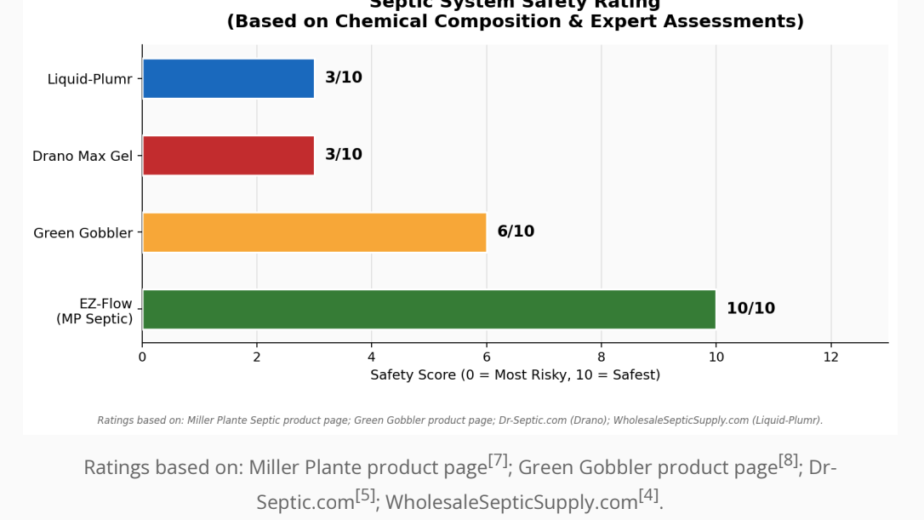
Instead of waiting for a clog to form, use a natural, enzyme-based drain treatment once a month. Products like a natural enzyme-based drain cleaner use beneficial bacteria to literally “eat” the organic buildup lining your pipes.
Because it is 100% natural, it is completely safe for your plumbing. And when those enzymes eventually reach your septic tank, they actually help the system by adding more healthy bacteria to the ecosystem.
The Bottom Line
Unclogging a sink on a septic system requires a little more physical effort, but it protects your home from a massive repair bill. By relying on boiling water, plungers, and drain snakes to clear blockages, and using a natural enzyme product like a natural enzyme-based cleaner for ongoing maintenance, you can keep your pipes clear and your septic tank healthy.
Regular maintenance with a high-quality monthly septic tank treatment can significantly extend the life of your septic system, prevent costly backups, and ensure its efficient operation for years to come.
1 Comment
Comments are closed.