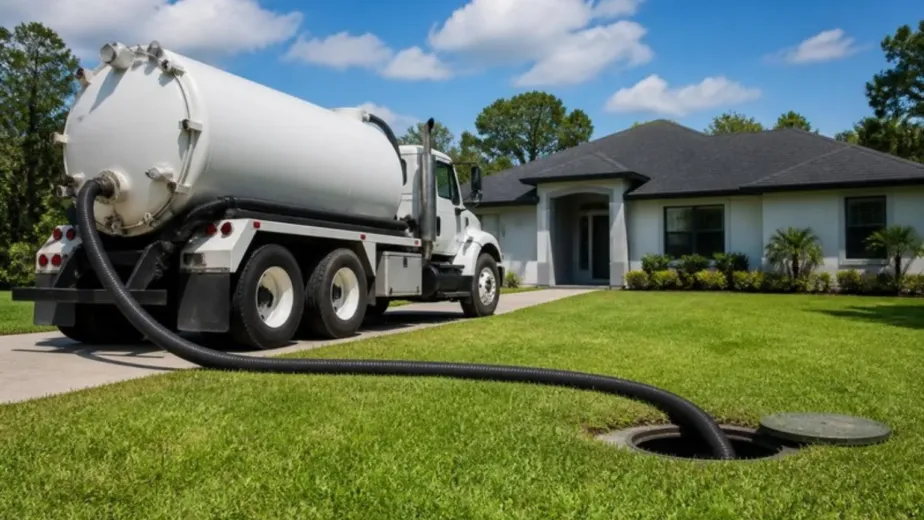
What is drainfield biomat? It is a naturally developing, microbe-rich layer at the soil interface where septic effluent enters a drainfield. A healthy, moderate biomat helps treat wastewater, but excessive buildup can restrict infiltration and contribute to hydraulic problems. [1] [2]
Where does biomat form?
In a conventional septic system, the tank settles solids and sends liquid effluent to a trench or bed. The effluent moves through gravel, chambers, or another distribution medium and then contacts the surrounding soil. Microorganisms in and near that infiltrative surface help break down organic matter and remove or transform pollutants as wastewater moves through the soil. [3]
The biomat develops at and near that soil contact zone. Research describes it as a dark, organic-rich region with high water content and dense microbial activity. It is not a separate tank, a chemical deposit, or something a homeowner should scrape out. [1]
Is biomat good or bad for a septic system?
Usually, some biomat is normal and useful. Its microbial community can reduce remaining organic matter and help remove pathogens before effluent reaches groundwater. In that sense, a stable biomat is part of the drainfield’s treatment process, not automatically a sign of failure. [1] [2]
The problem is balance. As organic loading and microbial growth increase, the layer can become less permeable. Excessive pore clogging slows the rate at which effluent enters the soil. If wastewater arrives faster than the soil can accept it, water may pond in the trench, back up toward the house, or surface above the drainfield. [1]
That does not mean every wet spot or slow drain is caused by biomat. Drainfield performance also depends on soil type, groundwater, weather, system design, distribution, wastewater flow, and the condition of tanks, filters, pipes, pumps, and controls. [1] [3]
How does biomat affect treatment and flow?
A drainfield must do two jobs at once: treat wastewater and disperse it into suitable soil. The biomat supports treatment by providing a concentrated microbial zone. It can also add resistance to flow. A thin, functioning layer may be compatible with good performance; a thick or poorly aerated layer can limit infiltration.
The factors that influence biomat formation include wastewater composition and loading rate, soil characteristics, microorganisms, temperature, and the way effluent is applied. [1] That is why the same symptom can have different causes at different homes. A professional may need to review the system design and maintenance history, inspect the tank and distribution components, and evaluate the drainfield rather than assume “biomat” is the diagnosis.
Excess solids are a particular concern. When a tank is not maintained, solids can migrate into the drainfield and clog it. EPA identifies routine maintenance and pumping as important ways to reduce that risk. [4]
What causes excessive biomat buildup?
Common contributors include a high wastewater load, poor tank maintenance, solids or grease leaving the tank, and soil or groundwater conditions that limit drainage. Repeated overloading can also make a problem more visible: running several high-water-use appliances together, sending stormwater toward the field, or irrigating heavily can saturate soil that already has limited capacity.
Household behavior matters, but it is not the whole diagnosis. Clemson Cooperative Extension recommends spreading out water use, protecting the field from vehicles and structures, keeping stormwater away, and avoiding inappropriate items such as fats, oils, grease, wipes, and chemical drain openers. [2] These steps reduce stress on the system; they do not remove an established structural or hydraulic defect.
Do not assume that adding yeast, bacteria, enzymes, or another biological treatment will correct a failing drainfield. Extension guidance says biological additives are unnecessary for normal septic operation and warns against products that claim to eliminate pumping. [2] No additive can repair a collapsed pipe, failed pump, saturated site, damaged tank, compacted soil, or other mechanical, structural, or design problem.
What signs may indicate a drainfield problem?
Watch for changes on the property and inside the home, including:
- Slow drains, gurgling, or wastewater backing up into fixtures.
- Standing water, damp or spongy soil, or sewage odors over or near the tank or drainfield.
- Unusually lush, bright-green vegetation over the field during otherwise dry weather.
- Unequal drainage or wastewater surfacing.
EPA lists these as possible signs of a malfunction, but none identifies biomat as the cause by itself. [4] Rain can temporarily saturate soil, and odors can also come from venting or other plumbing conditions. A professional inspection is needed to distinguish a biomat-related infiltration issue from a blocked line, full tank, distribution problem, groundwater impact, or another failure.
What should a homeowner do if the field is wet or backing up?
Treat surfacing sewage or an indoor backup as a health and system emergency. Keep people and pets away from wastewater, avoid contact, and call a qualified septic or plumbing professional. Do not enter a septic tank, pump chamber, or other confined space. Electrical components, pumps, wastewater exposure, and structural repairs require trained professionals.
Until the cause is known, reduce water use and stop activities that add avoidable flow to the system. Keep vehicles, heavy equipment, and new structures off the drainfield. Divert roof runoff and other stormwater away from it, but do not dig into the field or attempt to excavate the biomat yourself.
A qualified professional may inspect the tank, effluent filter, pipes, distribution box, pumps and controls, and visible drainfield conditions. EPA notes that inspections can include checking for backups, leaks, unequal drainage, blockages, ponding, or groundwater effects; some investigations may require carefully excavating a portion of the field. [4] Follow local health-department requirements before any repair, alteration, or replacement.
How can you protect normal drainfield performance?
Start with the basics:
- Maintain the tank. Follow the inspection and pumping schedule set by your local authority and septic professional. EPA gives inspection every one to three years and pumping every three to five years as general guidance, while noting that actual frequency varies with tank size, household size, water use, solids, and other conditions. [4]
- Use water evenly. Repair leaks, run full loads, and avoid stacking multiple large water uses at once.
- Keep solids and grease out. Flush only human waste and toilet paper. Dispose of fats, oils, grease, wipes, and household chemicals through appropriate waste channels.
- Protect the soil. Keep traffic, structures, deep-rooted plantings, and concentrated irrigation away from the field. Maintain drainage so rainwater does not flow onto it. [2]
- Keep records. Save permits, inspection reports, pumping receipts, repairs, and notes about symptoms. Those records help a professional identify trends before a backup occurs.
These practices support the whole septic system. They cannot guarantee a particular lifespan or prevent failure when the site, design, soil, groundwater, or equipment is unsuitable.
The Bottom Line
Drainfield biomat is a normal microbial layer that helps treat septic effluent at the soil interface. It matters because too little treatment activity can reduce protection, while excessive growth or clogging can slow infiltration. Protect the field, maintain the tank, manage water and solids, and call a qualified professional for wet ground, odors, slow drainage, backups, or suspected failure. A diagnosis—not a product promise—should determine the remedy.
References
[1] Microbial Diversity of Septic Tank Effluent and a Soil Biomat: https://pmc.ncbi.nlm.nih.gov/articles/PMC2681617/
[2] Be Septic Safe: Best Practices for Septic System Maintenance: https://hgic.clemson.edu/factsheet/be-septic-safe-best-practices-for-septic-system-maintenance/
[3] Types of Septic Systems: https://www.epa.gov/septic/types-septic-systems
[4] Resolving Septic System Malfunctions: https://www.epa.gov/septic/resolving-septic-system-malfunctions