Having your septic tank pumped is a routine part of homeownership, but how do you know if the company you hired actually did the job right? A homeowner recently shared that their pumping contractor left only a couple of inches of material in the bottom of their tank and they were concerned about whether the job was done correctly.
To understand whether a pump job was done properly, you first need to understand what a septic tank pumping is actually supposed to accomplish — because the water level in your tank after pumping is not the right thing to focus on.
What is the Goal of Pumping a Septic Tank?
According to Virginia Cooperative Extension at Virginia Tech, the goal of pumping a septic tank is specific and straightforward:
> “The goal of pumping a septic tank is to remove the solids — this includes the heavy solids from the bottom of the tank and the fats, oils, and greases found at the top of the tank. So long as the septic system drain lines are functioning correctly, the effluent water in the tank should not cause any problems.” [1]
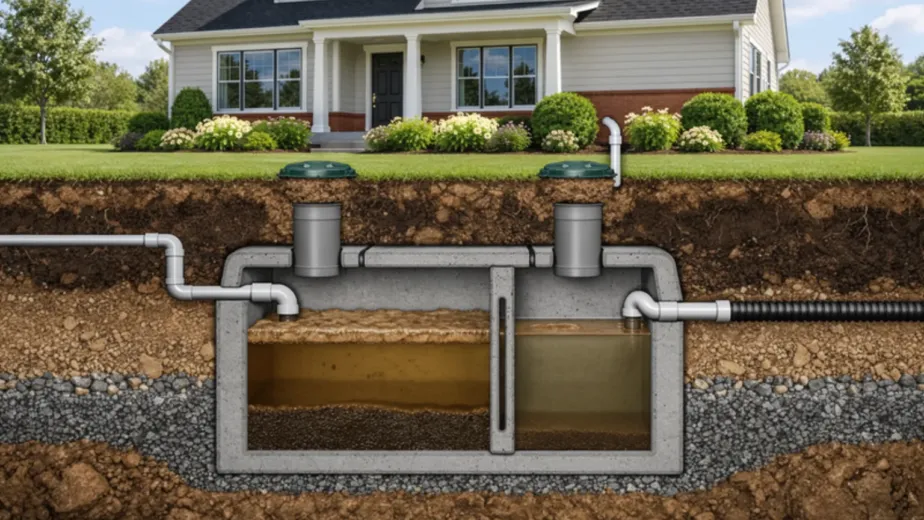
This is the key distinction that most homeowners do not know. A septic tank has three distinct layers: a scum layer of fats, oils, and grease floating at the top; a effluent layer of relatively clear water in the middle; and a sludge layer of heavy solids settled at the bottom [1]. The water in the middle is not the problem. It is harmless and will naturally refill within days of normal household use. The dangerous layers are the sludge at the bottom and the scum at the top — and those are what a professional pumper must focus on removing completely.
It is also normal and intentional for a small quantity of sludge to remain at the very bottom of the tank after pumping. This residual material is rich in the anaerobic bacteria needed to restart the digestion process as the tank refills [2]. A properly pumped tank will have a thin layer of this biological “seed” remaining — but the bulk of the sludge and all of the scum should be gone.
The Red Flags of a Bad Pump Job
The question is not how much water is left in the tank — it is whether the sludge and scum were properly removed. Here are the warning signs that a contractor cut corners:
Pumping Through the Cleanout Port Instead of the Main Lids
The first rule of proper pumping is that the contractor must open the main access lids — the large manhole-style covers that give full access to each compartment of the tank. Pumping through the small 4-inch PVC inspection port or cleanout pipe is a significant red flag [3]. A hose dropped through a small port cannot reach the corners of the tank, which means heavy sludge will be left behind to harden and eventually clog your drain field.
Failing to Agitate and Back-Flush the Sludge
Heavy sludge at the bottom of the tank does not simply flow into a vacuum hose. A professional pumper will agitate the tank — often by pumping some liquid out and then reversing the flow to break up the compacted solids — so that the sludge can be fully removed. A contractor who simply drops the hose in and lets it run without agitating the tank is likely leaving the most dangerous material behind.
Not Inspecting the Baffles
The baffles are the T-shaped pipes at the inlet and outlet of your tank that prevent the scum layer from escaping into your drain field. A professional pumper will visually inspect these baffles while the tank is open to confirm they are intact and functioning [2]. Pumping time is the only time the inside of your tank is accessible — a good contractor treats it as an inspection opportunity, not just a vacuum job.
Questions to Ask Before Hiring a Septic Pumping Company
To protect your system and your wallet, ask these questions before you hire a contractor:
| Question | What a Good Answer Sounds Like |
|---|---|
| Do you pump from the main access lids or the cleanout port? | “We always open the main lids for full access.” |
| Do you agitate or back-flush to remove the heavy sludge? | “Yes, we break up the solids to ensure a thorough clean.” |
| Do you inspect the baffles and tank condition while you pump? | “Yes, we check the baffles and tank walls as part of every service.” |
| Are you licensed and permitted to haul and dispose of septage? | “Yes, we hold a state permit for septage disposal.” |
If a contractor is unwilling to answer these questions or gives vague responses, that is a strong signal to look elsewhere.
After the Pump Job: Restoring Your Tank’s Biology
Once your tank has been properly pumped, the bacterial population inside it will be significantly reduced. This is the most critical window to be mindful of what goes down your drains. Bleach, antibacterial soaps, and harsh chemical drain cleaners will kill the small amount of seed bacteria left in the tank, slowing the recovery of the biological ecosystem.
Many homeowners choose to use a high-quality bacterial septic tank treatment in the weeks following a pump-out to help replenish the microbial population and get the tank back to peak digestive performance as quickly as possible. Combined with professional pumping every 3 to 5 years — or longer with consistent biological maintenance — this approach gives your septic system the best chance of a long, trouble-free life.
──────────────────────────────────────────────────
References
[1] Virginia Cooperative Extension. “What to Expect When Getting Your Septic Tank Pumped.” Philip Brown, Virginia Tech; Steve Thomas, Virginia Department of Health. January 2024. https://www.pubs.ext.vt.edu/SPES/spes-574/spes-574.html
[2] Southeastern Idaho Public Health. “Pumping Your Septic Tank.” https://www.siphidaho.org/environmental-health/septic-pumping-your-tank.php
[3] HomeField Onsite Environmental. “The Right Way to Pump Your Septic Tank.” https://www.homefieldonsite.com/east-valley/the-right-way-to-pump-your-septic-tank/